This 10-day China itinerary is designed for first-time foreign visitors who want a classic route without trying to see too much at once. It balances Beijing’s imperial history and Great Wall access, Xi’an’s ancient capital atmosphere and food, and Shanghai’s modern skyline, walkable neighborhoods, and convenient departure options.
The route works well because it follows a natural travel rhythm: start with China’s major historical landmarks, continue by high-speed rail or flight to one of the country’s most important ancient cities, then finish in Shanghai where transport, hotels, museums, restaurants, and international flights are easier to manage.
Who this itinerary is for
This itinerary is best for travelers visiting China for the first time who want a practical introduction to history, food, daily logistics, and modern city life. It is also a good choice if you prefer a route with strong transport links, many hotels that accept foreign guests, and enough English-friendly travel infrastructure to reduce friction.
It is not meant for travelers who want remote scenery, minority culture routes, or a slow one-city stay. Ten days is enough for Beijing, Xi’an, and Shanghai, but it is not enough for every famous destination in China.
Quick route overview
City – Recommended stay – Transport method – Highlights; Beijing – 4 days – International arrival, then subway and taxis inside the city – Forbidden City, Great Wall, Temple of Heaven, hutongs, Peking duck; Xi’an – 2 days – High-speed rail or flight from Beijing – Terracotta Warriors, City Wall, Muslim Quarter, roujiamo, biangbiang noodles; Shanghai – 4 days – High-speed rail or flight from Xi’an, then metro and walking – The Bund, former French Concession, Yu Garden, skyline views, optional Suzhou or Hangzhou day trip
Day 1: Arrival and an easy first evening
Keep the first day light. After landing, focus on getting to your hotel, checking that Alipay or WeChat Pay works, buying water and basic supplies, and saving your hotel address in Chinese. If you have energy, take a short walk around a hutong area, Shichahai, Wangfujing, or a nearby park rather than forcing a major attraction after a long flight.
Day 2: Forbidden City, Jingshan Park, and hutongs
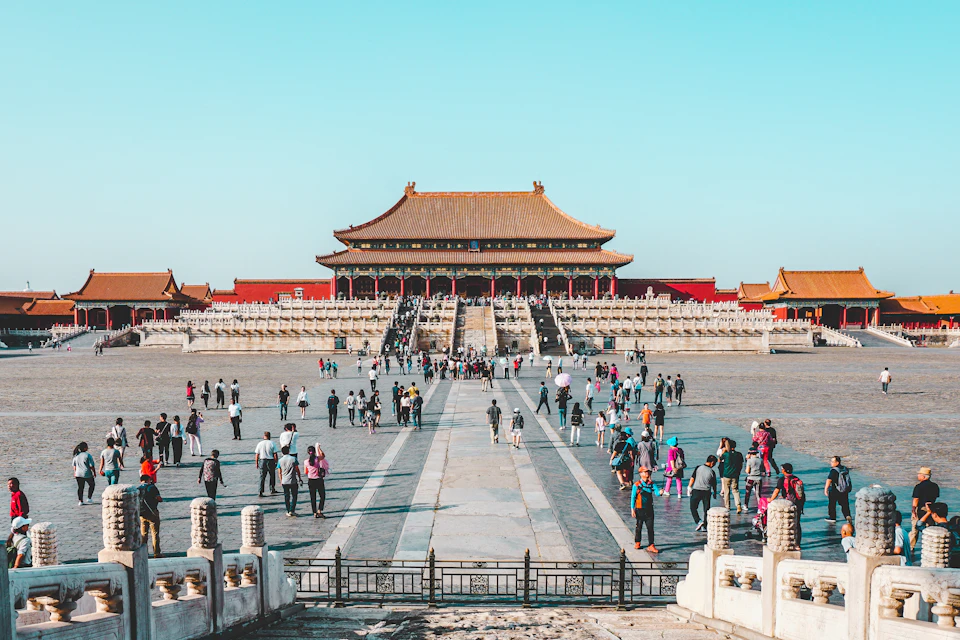
Use your first full day for Beijing’s imperial core. The Forbidden City can take several hours, and Jingshan Park gives one of the best views back over the palace roofs. Travelers should check official booking requirements before visiting because reservation rules can change. In the evening, keep dinner simple: zhajiangmian, dumplings, hotpot, or a Peking duck reservation if you want one planned meal.
Day 3: Temple of Heaven, Lama Temple, and neighborhood walking
Start at the Temple of Heaven in the morning, when local life around the park is often at its best. Later, visit Lama Temple and nearby Wudaoying or Guozijian for slower streets, cafes, and small shops. This day gives the itinerary breathing room and stops Beijing from becoming only palace walls and giant squares.
Day 4: Great Wall day trip
Use day four for the Great Wall. Mutianyu is a practical first-time choice because it is scenic, restored, and easier to manage than more remote sections. Leave early, bring water, and avoid scheduling a train to Xi’an on the same evening unless you are comfortable with a long and tiring travel day.
Day 5: Travel to Xi’an and explore the old city
Travel from Beijing to Xi’an by high-speed rail or flight. High-speed rail is smoother if the timing works, but flights can sometimes be faster depending on your hotel locations and ticket prices. After arrival, walk or bike part of the City Wall, see the Bell Tower and Drum Tower area, and spend the evening around the Muslim Quarter or nearby food streets.
Day 6: Terracotta Warriors and Xi’an food
Use a full day for the Terracotta Warriors and related sights. The site is more meaningful with context, so consider a good guide or at least read background before arriving. Travelers should check current ticket and entry requirements before visiting. Back in the city, try roujiamo, biangbiang noodles, lamb skewers, cold noodles, and local breads.
Day 7: Travel to Shanghai and see the Bund
Travel from Xi’an to Shanghai by high-speed rail if you want the rail experience, or fly if the schedule is better. After checking in, keep the first evening focused on the Bund and the Huangpu River skyline. This is the easiest way to feel the contrast between the first half of the trip and modern Shanghai.
Day 8: Yu Garden, museums, and People’s Square
Spend the day around Yu Garden, People’s Square, and one museum or exhibition. Do not treat Shanghai as only a skyline stop. Its value is in the mix of river views, urban history, food, design, and walkable neighborhoods.
Day 9: Former French Concession and local food
Use day nine for Jing’an, Xuhui, and the former French Concession. Walk slowly, leave room for cafes and side streets, and try xiaolongbao, shengjianbao, scallion oil noodles, or neighborhood breakfast shops. This is also a good day for a skyline observation deck if the weather is clear, but check current ticket requirements before going.
Day 10: Flexible final day or easy day trip
Keep the final day flexible. If you are rested, consider a simple day trip to Suzhou or Hangzhou by high-speed rail, but do not force it if your flight leaves the next morning. Many travelers are better served by a calmer Shanghai day, shopping for small gifts, revisiting the Bund, or staying close to airport logistics.
What to book in advance
Travelers should check official booking requirements before visiting the Forbidden City, the Terracotta Warriors, major museums, and popular observation decks. Arrange Great Wall transport before the night before your visit. Book high-speed train tickets early for Beijing to Xi’an and Xi’an to Shanghai, especially around weekends and Chinese public holidays. Reservation systems change, so confirm current rules close to your travel date rather than relying on old screenshots or old blog posts.
Food recommendations
In Beijing, try Peking duck and zhajiangmian, plus jianbing, dumplings, hotpot, and simple noodle shops. In Xi’an, focus on roujiamo, biangbiang noodles, lamb skewers, yangrou paomo, and cold noodles. In Shanghai, look for xiaolongbao, shengjianbao, scallion oil noodles, braised pork, and neighborhood breakfast shops.
Do not schedule every meal at a famous restaurant. The best food rhythm usually mixes one planned meal with casual local places near your hotel, metro stops, or sightseeing route.
Intercity transport tips
High-speed rail is often the most comfortable way to connect Beijing, Xi’an, and Shanghai, but flights can make sense when train times are poor or prices are high. Beijing to Xi’an by high-speed train is roughly a half-day journey. Xi’an to Shanghai by train is longer, so compare flight schedules before deciding.
Train stations in China can feel more like airports than small railway stations. Use your passport name exactly when booking, keep your passport available, save station names in Chinese, and check whether your train leaves from Beijing West, Beijing South, Xi’an North, Shanghai Hongqiao, or another station. Around public holidays, book earlier and avoid tight same-day connections.
Weather and packing tips
Spring and autumn are usually the best seasons for this route. Beijing and Xi’an are generally drier, with more exposed walking at historical sites. Shanghai is more humid and can feel damp in winter or sticky in summer. Summer brings heat and crowds, while winter can be cold in Beijing and Xi’an.
Pack comfortable walking shoes, layers, sun protection, a power bank, tissues, basic medicine, and a small day bag. Keep screenshots of hotel addresses, train tickets, attraction reservations, and payment setup because mobile data or apps can fail at inconvenient moments.
Common mistakes
The biggest mistake is adding too many cities. Ten days is not enough for Beijing, Xi’an, Shanghai, Chengdu, Guilin, Zhangjiajie, and Hong Kong in one comfortable trip. Other common problems include underestimating distances inside Beijing, failing to book major attractions early, not preparing mobile payments before arrival, choosing hotels far from metro lines, and leaving too little time between trains, airports, and hotel check-in.
Is 10 days enough for China?
Yes, if you keep the route focused. Beijing, Xi’an, and Shanghai are enough for a strong first trip. More cities usually make the trip feel rushed.
Should I use trains or flights?
Use high-speed rail when the station locations and departure times are convenient. Use flights when the train journey is too long or the schedule is clearly better. Always compare total door-to-door time, not only the time on the train or plane.
Can foreigners use Alipay?
Many foreign visitors can use Alipay by registering, verifying details when requested, and linking an eligible international card. Set it up before arrival and keep WeChat Pay, a second card, and a little cash as backups.
Is China easy for first-time travelers?
China can be very manageable for first-time travelers if payments, internet access, train tickets, translation tools, and hotel locations are prepared in advance. The trip becomes much harder when those basics are left until after landing.
Internal links
Use the Beijing guide, Xi’an guide, and Shanghai guide to plan each city in detail. Before arrival, read the Alipay guide, WeChat Pay guide, China eSIM guide, and China train guide.