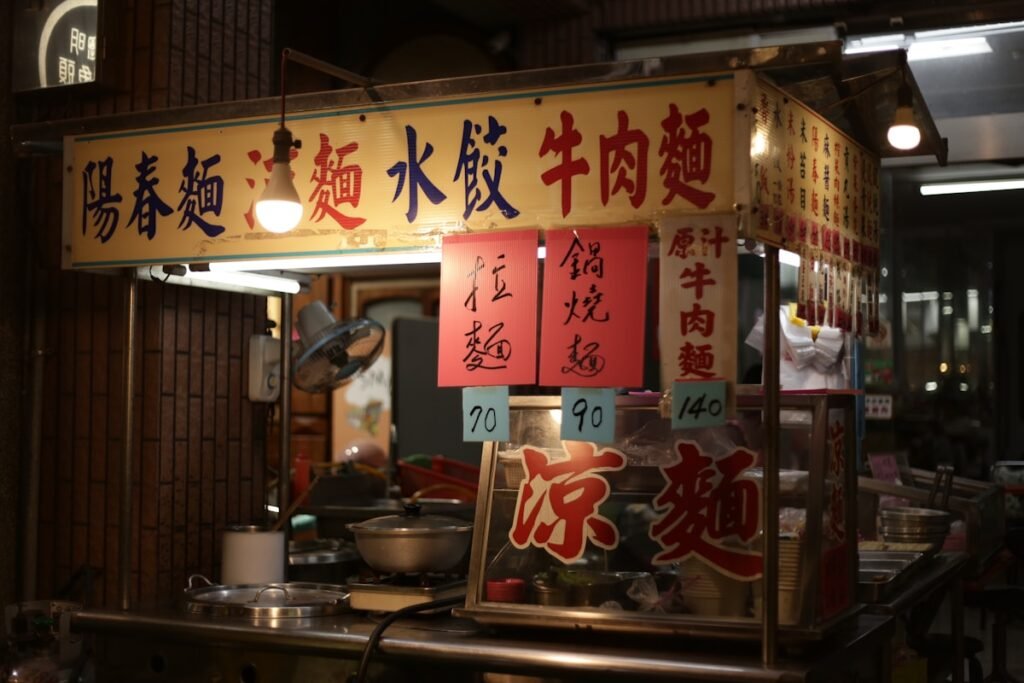
Short answer: you can order food in China without speaking a word of Chinese. Most restaurants in Chinese cities use QR code menus — scan with WeChat or Alipay, screenshot the menu, translate it with Google Translate or Baidu Translate, and tap what you want. In smaller restaurants, picture menus and pointing work fine. This guide covers all four ordering methods, how to handle dietary restrictions, what to order in each region, how to pay, and what to expect at the table.
How to order food in China: 4 methods that work without Chinese
Food is the highlight of any trip to China, and it is also the part that makes many foreign travelers nervous. The menus are in Chinese. The ingredients are not always obvious. The ordering process is different from what you are used to. But tens of thousands of foreigners eat their way across China every month without speaking a word of Chinese, and you can too. This guide covers how to order, what to eat, how to handle dietary restrictions, and how to pay — all from the perspective of a foreign traveler who has actually done it.
One thing you will need before any restaurant visit: a working phone with internet. Many restaurants in China now use QR code menus, and translation apps require a data connection. Get a China eSIM before your trip so you are never stuck staring at a menu you cannot read.
How to order food: four methods that actually work
Chinese restaurants do not work like Western restaurants. There is often no waiter hovering at your table waiting to take your order. You either scan a QR code and order on your phone, point at pictures on a menu, or flag someone down. Here are the four methods that work reliably:
Method 1: QR code ordering (most common in 2026)
In most restaurants in Chinese cities, you sit down, scan a QR code on the table with WeChat or Alipay, and the full menu appears on your phone. This is great — and also challenging — because the menu is in Chinese. Here is the workflow that works:
- Open WeChat or Alipay and scan the QR code on your table.
- The menu loads as a mini-program inside the app. It is entirely in Chinese.
- Take screenshots of the menu pages that look interesting.
- Open your translation app — Google Translate works with an eSIM, or use Baidu Translate (often more accurate for Chinese food terms). Use the camera/screenshot translation feature to read the dishes.
- Once you find dishes you want, tap them in the mini-program to add to your order. Most QR menus have photos — tap the ones that look good.
- Submit your order through the mini-program. Payment happens inside WeChat or Alipay.
This sounds complicated but takes about 90 seconds once you have done it once. The screenshot-and-translate step is the key — do not try to read the Chinese menu in real time. Screenshot, translate, order.
Method 2: Picture menus (best for beginners)
Many restaurants in tourist areas have picture menus. Some have English translations. If you see photos on the menu or on the wall, just point. This is how most first-time visitors eat in China and it works perfectly well. If a restaurant has no picture menu, try the next restaurant — in any Chinese city with more than a million people, there are hundreds of restaurants within walking distance. You are not stuck with the first one you walk into.
Method 3: Translation apps (camera mode)
For paper menus with no pictures, your phone camera is your best friend. Google Translate has a camera mode that overlays English text on Chinese characters in real time. It is not perfect — food names get mangled into sometimes-hilarious translations — but it gives you enough information to know whether you are ordering chicken, pork, or something you would rather not think about. For best results with food terms, Baidu Translate often beats Google Translate on Chinese menus. Download it before your trip — the Baidu Translate app is free and works with any internet connection.
Method 4: The “bring me what they are having” approach
Walk around the restaurant, look at what other tables are eating, and point. Smile. This works in small local restaurants, noodle shops, and street food stalls everywhere. Chinese diners are generally amused and helpful when a foreigner shows genuine interest in their food. This method is also how you find the best dishes — the ones the locals actually order, not the ones with translated names on the tourist menu.
What to order: accessible dishes for first-time visitors by region
China is not one cuisine — it is at least eight distinct regional cuisines, each with its own flavors, ingredients, and cooking techniques. Here is what to eat in each major region, with dishes that are accessible to a foreign palate:
Beijing and the North
- Beijing roast duck (北京烤鸭): the most famous dish. Crispy skin, tender meat, served with thin pancakes, spring onions, and sweet bean sauce. Go to a proper duck restaurant — Quanjude and Siji Minfu are the famous ones; Dadong is the upscale modern version.
- Zhajiangmian (炸酱面): hand-pulled noodles with a savory fermented soybean paste, topped with shredded cucumber and bean sprouts. A Beijing classic that costs about ¥15-25.
- Jiaozi (饺子): boiled dumplings filled with pork and cabbage, or lamb and leek. Northern China’s comfort food. Dip them in black vinegar with a little chili oil.
- Lamb skewers (羊肉串): street food from the northwest that conquered Beijing. Grilled over charcoal, seasoned with cumin and chili. Look for the smoke and the crowds.
Shanghai and the East
- Xiaolongbao (小笼包): soup dumplings. Thin-skinned dumplings filled with pork and a spoonful of hot broth. Bite a small hole, slurp the soup, then eat the dumpling. Din Tai Fung is the international chain; Jia Jia Tang Bao is the local favorite.
- Shengjianbao (生煎包): pan-fried pork buns with a crispy bottom and juicy filling. Yang’s Dumplings is the famous chain — look for the bright yellow sign.
- Hongshao rou (红烧肉): red-braised pork belly. Slow-cooked in soy sauce, sugar, and spices until the fat melts. Rich, sweet, and deeply satisfying. A Shanghai staple.
- Hairy crab (大闸蟹): seasonal specialty in autumn (September-November). Steamed whole and eaten with your hands. Messy, delicious, and a Shanghai obsession.
Sichuan and Chongqing (the spicy southwest)
- Mapo tofu (麻婆豆腐): soft tofu in a fiery sauce of chili bean paste, Sichuan peppercorns, and minced pork. The Sichuan peppercorns create a tingling, numbing sensation called “mala” that is unique to this region. It is not just heat — it is a physical sensation. Start with a small bite.
- Kung pao chicken (宫保鸡丁): diced chicken stir-fried with peanuts, dried chilies, and Sichuan pepper. Much better than any takeaway version you have had outside China.
- Chongqing hot pot (重庆火锅): a bubbling cauldron of chili oil and Sichuan peppercorns into which you dip raw meats, vegetables, and tofu. It is a social experience as much as a meal. Order a split pot (yuanyang guo, 鸳鸯锅) with one side mild if you cannot handle full-strength Sichuan heat.
- Dan dan noodles (担担面): noodles in a spicy, nutty sauce with minced pork and preserved vegetables. A street food that became a restaurant classic.
Guangzhou and the South (Cantonese)
- Dim sum (点心): the classic Cantonese brunch of small plates served from rolling carts. Har gow (shrimp dumplings), siu mai (pork dumplings), char siu bao (barbecue pork buns), and egg tarts. Go before 11 AM for the full cart experience; after that, you order from a menu.
- White cut chicken (白切鸡): poached chicken served at room temperature with ginger-scallion sauce. Simple, clean, and the test of a good Cantonese chef.
- Wonton noodle soup (云吞面): delicate shrimp wontons in a clear broth with thin egg noodles. The Cantonese comfort food equivalent of chicken soup.
- Roast goose (烧鹅): glossy, mahogany-skinned roast goose with crackling skin and tender meat. As important to Guangzhou as duck is to Beijing.
Xi’an and the Northwest
- Biangbiang noodles (油泼面): wide, hand-pulled noodles drenched in hot chili oil with garlic, vinegar, and soy sauce. The character “biang” is one of the most complex in Chinese writing. You will remember the taste long after you forget the character.
- Roujiamo (肉夹馍): often called a “Chinese hamburger” — shredded braised pork stuffed into a crispy flatbread. The Muslim quarter in Xi’an also does a lamb version that is excellent.
- Yangrou paomo (羊肉泡馍): crumbled flatbread soaked in rich lamb broth with vermicelli noodles and tender lamb. You tear the bread yourself into small pieces, then the kitchen adds the broth. A Xi’an ritual.
Dietary restrictions: vegetarian, halal, gluten-free, and allergies
China is improving rapidly on dietary awareness, but it is still behind Western countries. Here is how to navigate each common restriction:
Vegetarian and vegan
Saying “I am vegetarian” (我吃素, wǒ chī sù) helps, but it is not always understood to mean “no meat stock, no animal fat, no oyster sauce.” Many Chinese dishes that appear vegetarian — stir-fried vegetables, tofu dishes, noodle soups — use meat stock or lard as a base. Buddhist vegetarian restaurants (look for 素菜馆 or the 佛 symbol) are the safest bet — they serve fully vegetarian food, often in buffet format, and are found in most Chinese cities. Show this phrase to your server: 我是严格的素食者,不吃肉、不吃鱼、不吃蛋、不用动物油 (I am a strict vegetarian: no meat, no fish, no eggs, no animal fat).
Halal
China has a large Muslim population, and halal restaurants (清真, qīngzhēn) are common throughout the country — not just in the northwest. Look for the green and white halal sign, often with Arabic text. In Xi’an, Lanzhou, and Urumqi, halal food is the default. In other cities, Lanzhou lamian (兰州拉面) shops — hand-pulled noodle restaurants run by Hui Muslims — are everywhere and always halal. The noodle soups are excellent and cost about ¥15.
Gluten-free
This is genuinely difficult in China. Soy sauce contains wheat. Noodles and dumplings are everywhere. Rice is the safest staple — stick to dishes served with plain rice and avoid anything with soy sauce, noodles, or wheat wrappers. Show this phrase: 我对小麦过敏,不能吃面条、饺子、酱油 (I am allergic to wheat — no noodles, no dumplings, no soy sauce). Hot pot restaurants are a good option because you control what goes into the pot, and the broth options include non-soy-sauce bases.
Food allergies
Print a card with your allergy written in Chinese characters before your trip. Generic statements like “I am allergic to X” are not always taken seriously, so be specific: “Eating peanuts will send me to the hospital” (吃花生我会过敏休克,需要急救) is more effective than “no peanuts please.” The concept of cross-contamination is not widely understood in smaller restaurants, so if your allergy is severe, eat at mid-range or higher restaurants where the kitchen is more likely to accommodate.
How to pay at restaurants
Cash is dying in Chinese restaurants. In 2026, most urban restaurants expect you to pay by scanning a QR code with WeChat or Alipay — often the same QR code you used to order. Some restaurants still accept cash, especially in smaller cities and tourist areas, but do not count on it. International credit cards are accepted at high-end hotels and upscale restaurants but are useless at local noodle shops and street stalls. Set up Alipay with your international card before your trip, and you will be able to pay at virtually every restaurant, food stall, and market in China.
Street food: what is safe and what to skip
Chinese street food is some of the best food you will eat in China. It is also where you are most likely to get sick if you are not careful. The rule is simple: eat where the locals eat. A street stall with a long line of Chinese customers is safer than an empty restaurant with a translated English menu. The high turnover means the food is fresh, and the locals would not keep coming back if it made them sick.
Specific safety tips for street food:
- Cooked food is safe. Anything grilled, boiled, fried, or steamed in front of you is fine. The heat kills bacteria.
- Raw vegetables and cut fruit: skip these from street stalls unless you can see them being washed and prepared. The tap water used to rinse them is not treated to drinking standards.
- Iced drinks: ice in China is generally made from filtered water at established businesses. At street stalls, stick to bottled drinks or hot tea.
- Night markets: every Chinese city has them, and they are one of the best travel experiences in the country. Go hungry, bring cash or Alipay, and follow the crowds to the busiest stalls. Beijing’s Donghuamen, Xi’an’s Muslim Quarter, and Chengdu’s Jinli Street are the famous ones — but every city has its own local version that is often better.
Table manners: a quick guide to not standing out
Chinese dining has its own etiquette, but locals are very forgiving of foreigners who do not know the rules. Here are the basics that actually matter:
- Sharing is the default. Dishes are placed in the center of the table and everyone takes from them with their own chopsticks or the serving spoon. Do not order one dish for yourself unless you are eating alone.
- Do not stick chopsticks upright in rice. This resembles incense sticks at a funeral and is genuinely considered bad luck. Lay them across the top of your bowl or on the chopstick rest.
- Tapping the table means “thank you.” When someone pours tea for you, tap two fingers on the table to acknowledge it. This is a Cantonese custom that has spread nationwide.
- Slurping noodles is fine. It is not rude — it is how you eat noodles. The louder the slurp, the more you are enjoying it.
- Fighting over the bill is a thing. If a Chinese friend invites you to dinner, they will insist on paying. You are expected to protest and offer to pay. They will still pay. This is a social ritual, not a real negotiation. As a foreign guest, you are not expected to pay when invited out — but offering once or twice is polite.
- Finishing every grain of rice is respectful. Leaving food on your plate is less common in China than in some Western countries. It is not a major faux pas, but finishing your food shows appreciation.
Five phrases that will make your restaurant experience better
You do not need to speak Chinese to eat well in China, but these five phrases open a lot of doors. Show them on your phone if you cannot pronounce them:
- 这个 (zhè ge) — “This one.” Point at a picture or another table’s food and say this. The most useful phrase in any Chinese restaurant.
- 不要辣 (bù yào là) — “Not spicy.” Essential in Sichuan, Hunan, and Chongqing, where the default spice level can be intense.
- 买单 (mǎi dān) — “The bill, please.” Say this to any staff member when you are ready to pay.
- 好吃 (hǎo chī) — “Delicious.” Say this to the chef or owner. It costs nothing and makes people genuinely happy.
- 打包 (dǎ bāo) — “Wrap it up / to go.” Portions are often generous. Taking leftovers home is completely normal.
FAQ: ordering food in China as a foreigner
Can I order food in China without speaking Chinese?
Yes. QR code menus, picture menus, translation apps, and pointing at other tables’ food are the four methods that work. See the full breakdown above in the ordering methods section.
Do Chinese restaurants have English menus?
Some do, especially in tourist areas and international hotel restaurants. But most local restaurants in Chinese cities use Chinese-only menus — either paper or QR code. Do not count on finding an English menu. Have a translation app ready.
How do I pay at Chinese restaurants?
Most urban restaurants in China expect payment via Alipay or WeChat Pay — often through the same QR code you used to order. Cash is still accepted at many smaller restaurants but is declining. International credit cards work at upscale hotels and high-end restaurants but rarely at local eateries. Set up Alipay with your international card before your trip.
What if I have food allergies in China?
Print a card with your allergy written in Chinese characters before your trip. Be specific — “Eating peanuts will send me to the hospital” is more effective than “no peanuts please.” Mid-range and higher-end restaurants are more likely to accommodate allergies than small street stalls. See the dietary restrictions section above for detailed guidance.
Is street food in China safe to eat?
Cooked street food (grilled, boiled, fried, steamed) is generally safe — the heat kills bacteria. The key rule: eat where the locals eat. A street stall with a long line of Chinese customers is safer than an empty restaurant with a translated English menu. Avoid raw vegetables and cut fruit from street stalls unless you can see them being washed and prepared.
The bottom line
Eating in China as a foreigner is not about speaking the language — it is about having the right tools and the confidence to use them. Screenshot the QR code menu, translate it with your phone, point at what looks good, and pay with Alipay. Start with the accessible dishes — dumplings, noodle soups, roast duck, dim sum — and work your way toward the more adventurous ones as your comfort grows. The food in China is too good to spend your trip eating at hotel buffets and McDonald’s. With a working eSIM for translation apps, Alipay on your phone for payments, and this guide bookmarked, you can eat your way through China like a traveler, not a tourist.
Next steps: Get a China eSIM so you can use translation apps at restaurants. Set up Alipay to pay at every restaurant, food stall, and market. And book food tours and cooking classes on Klook to go deeper into the cuisines that interest you most.
China Travel Essentials
Tools that make eating in China easy:
- eSIM for China: Compare China eSIM plans — translation apps need data at every restaurant
- Alipay setup: How to use Alipay as a foreigner — pay at every restaurant and street stall
- Food tours: Book guided food tours on Klook — English-speaking guides take you to the best local spots
- Translation app: Download Baidu Translate or Google Translate before your trip — camera mode reads Chinese menus in real time