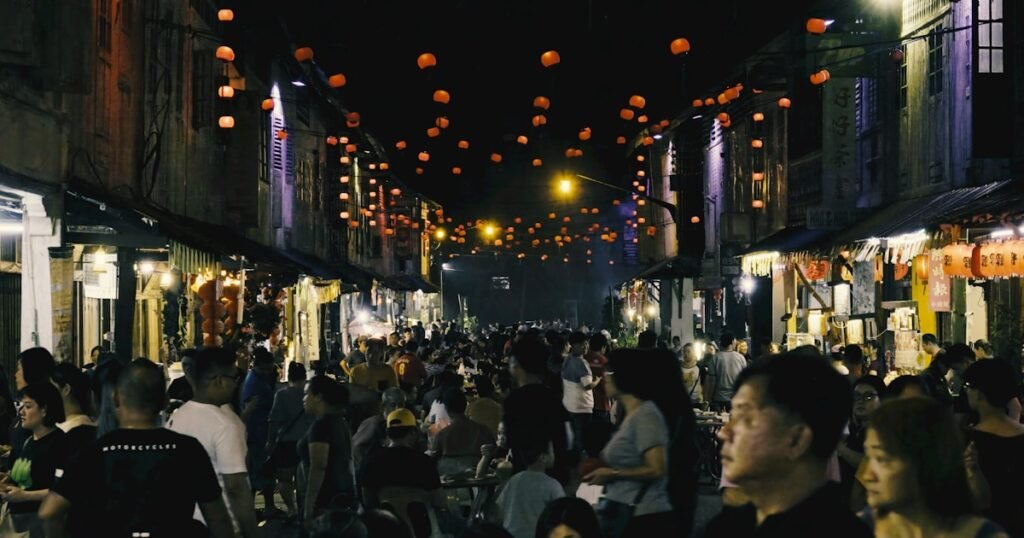
Quick answer: China’s food streets and night markets are where the country’s food culture is most alive and accessible. For a first-time visitor, they offer the easiest path to trying a wide range of regional street foods in one evening walk — no reservations, no language barrier (you point at what looks good), and low cost (¥5-30 per item). The best strategy: go to a well-known market on a weekday evening, walk the full length before buying anything, then double back to the stalls that had locals queuing.
Last reviewed: May 2026. Food market hours, stall availability, and seasonal offerings vary.
Best Food Streets by City
| City | Market | Known for | Tips |
|---|---|---|---|
| Beijing | Huguosi (护国寺), Niujie (牛街) | Zhajiangmian, lamb skewers, douzhi, jianbing | Avoid Wangfujing snack street — tourist trap. Niujie is the Muslim quarter with excellent lamb. |
| Xi’an | Muslim Quarter (回民街) | Roujiamo, biangbiang noodles, lamb skewers, persimmon cakes, yangrou paomo | The main street is crowded. Walk 2-3 side alleys deeper for better food and lower prices. |
| Shanghai | Yunnan Road, Shouning Road, Qibao Old Street | Soup dumplings, shengjianbao, crab, wontons | Qibao is a day trip — worth it for the canal atmosphere and sticky rice cakes. |
| Chengdu | Jinli, Kuanzhai Alley, Yulin area | Dandan noodles, skewers, mapo tofu, sweet water noodles | Jinli is photogenic but touristy. Yulin area (south) is where Chengdu locals actually eat. |
| Guangzhou | Shangxiajiu, Beijing Road | Dim sum, rice rolls, wonton noodles, roast meats | Best for morning and lunch rather than late night. |
How to Eat at a Chinese Food Market: First-Timer Strategy
- Walk the full length first. Do not buy at the first stall that looks good. Scout everything, note which stalls have local lines, and which items appear repeatedly (these are usually the area’s signature foods).
- Follow the locals. A queue of Chinese customers is the most reliable quality indicator. An empty stall at dinner hour is empty for a reason.
- Point and pay. Most stalls have prices displayed. Point at what you want, the vendor will tell or show you the price. Alipay/WeChat Pay is universal — cash still works too.
- Eat one item per stall. Do not order a full meal at one place. The point is to try small portions across multiple stalls. One skewer, one dumpling, one noodle — then move on.
- Go on a weekday. Weekend evenings bring the biggest crowds. Tuesday or Wednesday night gives you the same food with half the shoulder-rubbing.
Food Safety: Practical Advice
Chinese food markets are not inherently unsafe, but smart choices matter. Eat at stalls with high turnover — fresh food moves fast. Cooked food is safer than raw. Bottled drinks are safer than fresh-squeezed. If you have a sensitive stomach, avoid raw vegetables and ice. Street food is part of the China experience for millions of travelers — most people eat it without issues.