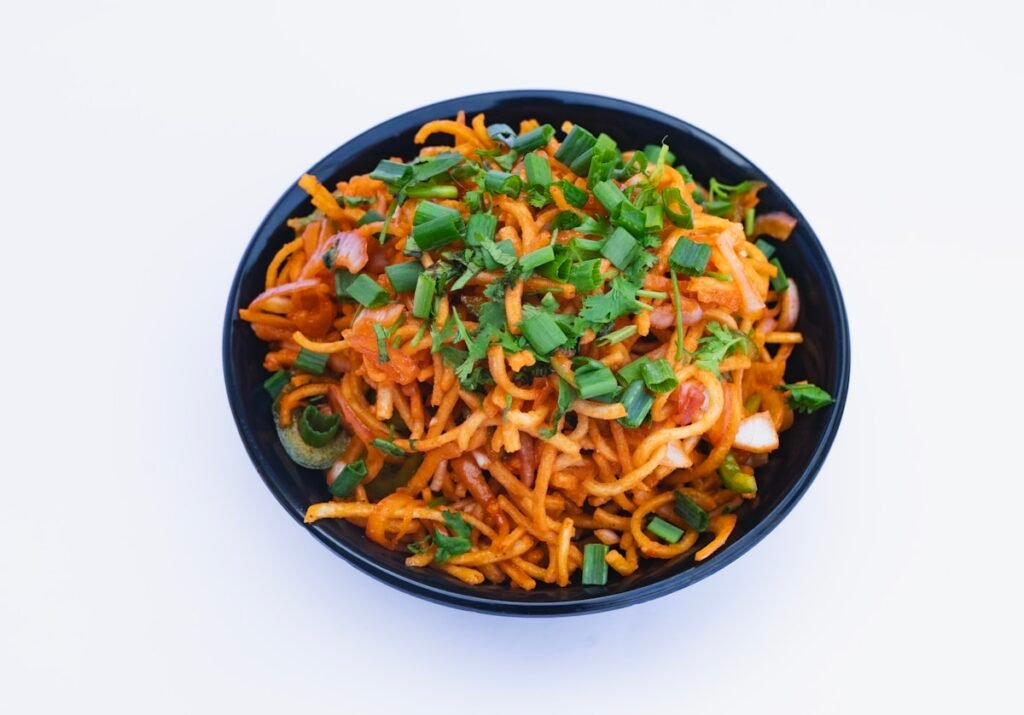
Quick answer: Zhajiangmian (炸酱面) is Beijing’s signature everyday noodle — thick wheat noodles topped with a savory soybean paste sauce (zhajiang), diced pork, and fresh vegetable shreds (cucumber, radish, soybean sprouts). It is the meal Beijing locals eat between the duck dinners, not a banquet dish. For a first-time visitor, it is the best casual Beijing food experience: affordable (¥15-35), widely available in neighborhood noodle shops across the city, and a genuine taste of old Beijing that does not require a reservation or a group.
Last reviewed: May 2026.
What Makes a Good Zhajiangmian
A proper zhajiangmian has three components working together: the noodles should be thick and chewy (hand-pulled ideally), the zhajiang sauce should be dark, savory, and rich from slow-cooked fermented soybean paste with diced pork belly, and the fresh vegetable toppings (shredded cucumber, radish, bean sprouts) provide crunch and freshness that cut through the richness. You mix everything together before eating — the noodles should be coated, not swimming in sauce.
Where to Try It
- Neighborhood noodle shops (面馆) — The most authentic experience. Look for shops filled with locals at lunch. If you see old men eating noodles, you are in the right place.
- Haidilao’s zhajiangmian — Not traditional, but the hotpot chain serves a surprisingly decent version accessible to foreigners.
- Old Beijing restaurants near hutongs — Many serve zhajiangmian alongside other Beijing classics.
How to Order
“Yī wǎn zhájiàngmiàn” (一碗炸酱面) = one bowl of zhajiangmian. Point at the menu photo if needed — every noodle shop has pictures. Budget ¥15-35 for a bowl. Add a side of pickled garlic or chili paste if offered. No need to order a whole meal — a bowl of zhajiangmian is a complete lunch by itself.
Related Guides
Editor note: Updated May 2026.