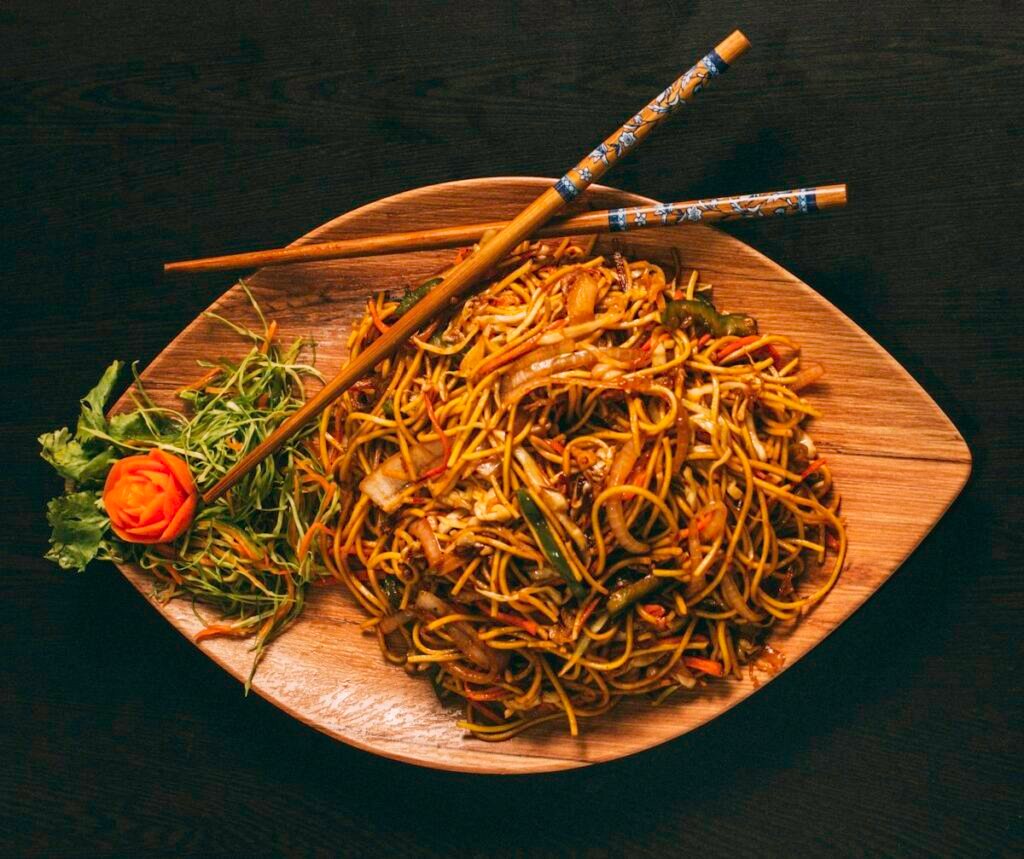
Quick answer: Biangbiang noodles, also searched as biang biang mian, biangbiangmian, or biangbiang noodles, are Xi’an’s famous wide hand-pulled noodles. A bowl is usually tossed with chili oil, garlic, vinegar, vegetables, and sometimes meat sauce. It is one of the easiest local Xi’an foods for a first-time visitor to recognize, order, and enjoy.
Last reviewed: June 2026.
What makes biangbiang noodles special?
The noodles themselves are the point. They are wide, thick, chewy, and irregular because they are pulled by hand instead of cut into thin strands. The cook stretches and slaps the dough against the counter, which is where the name is often said to come from. The final bowl usually has chili flakes, minced garlic, salt, vegetables, and hot oil poured over the top so the seasoning becomes fragrant.
The texture is different from most noodle dishes visitors know from home. You are not eating a delicate soup noodle; you are eating broad ribbons with bite, oil, vinegar, garlic, and heat. If you only try one noodle dish in Xi’an, this is the one that feels most local and most memorable.
Biangbiang, biang biang mian, or biangbiangmian?
Travelers search this dish with several spellings. They all usually mean the same Xi’an noodle dish:
- Biangbiang noodles — the most common English name.
- Biang biang mian — pinyin-style wording; mian means noodles.
- Biangbiangmian — a compact search spelling people use online.
- Biangbiang mian — another common mixed spelling.
For pronunciation, say it roughly like byang-byang myen. You do not need perfect tones to order it in Xi’an. Showing the English name, a photo, or the Chinese menu item on your phone is usually enough.
Where to eat biangbiang noodles in Xi’an
The easiest areas to look are the Muslim Quarter side streets, around the Bell Tower and Drum Tower, near Yongxing Fang, and around busy local food streets close to the old city wall. You do not need a famous restaurant for this dish. A small noodle shop with fresh dough, fast turnover, and local customers is often better than a tourist-only place.
Look for shops where you can see the noodle pulling or where bowls are being mixed quickly at the counter. Many simple shops serve only a few things: biangbiang noodles, cold noodles, roujiamo, and maybe a vegetable side. That is a good sign. If the menu is only in Chinese, point at a bowl someone else is eating or show the words “biangbiang mian” on your phone.
How to order biangbiang noodles
Use this simple phrase: yi wan biangbiang mian — one bowl of biangbiang noodles. A normal bowl is often around ¥12-25, depending on the shop, toppings, and neighborhood.
After the bowl arrives, mix it thoroughly before eating. The chili oil, garlic, vinegar, and sauce sit on top at first, so the first bite can taste uneven if you do not stir. The noodles are wide and slippery, so it is normal to lift them high with chopsticks and eat slowly. Add table vinegar if you want more acidity.
Is it spicy?
Usually yes, but it is not always extreme. The flavor is more about chili oil, garlic, vinegar, and noodle texture than pure heat. If you are sensitive to spice, ask for less chili oil or choose a shop where the sauce is added separately. If you like spice, biangbiang noodles are one of the safest Xi’an dishes to order confidently because the flavor is supposed to be bold.
What to eat with it
Biangbiang noodles work well as a full lunch by themselves. If you want a simple Xi’an food walk, pair them with roujiamo, cold noodles, lamb skewers, or a drink from a nearby snack stall. Do not over-order at the first shop; Xi’an food streets are better when you leave room for two or three small stops.
FAQ
Are biangbiang noodles the same as belt noodles?
They are very similar in English descriptions. Many travelers call them belt noodles because the noodles are wide and ribbon-like.
Can vegetarians eat biangbiang noodles?
Sometimes. Many bowls can be made without meat, but the sauce or toppings may still include animal-based seasoning. Ask or use a translation app if you need strict vegetarian food.
Is the dish only in Xi’an?
Xi’an and Shaanxi are the classic places to eat it, but you may see biangbiang noodles in other Chinese cities. For a first trip, Xi’an is still the best place to try it.
Related Xi’an and food guides
- Roujiamo in Xi’an: What to Know Before You Order
- Xi’an Guide: Terracotta Warriors, City Walls, Muslim Quarter, and More
- Xi’an City Wall Guide: Bike, Sunset, and Food Planning
- China Food Streets and Night Markets Guide
- China Food Guide for Foreign Tourists
- 15-Day China Itinerary for First-Time Visitors