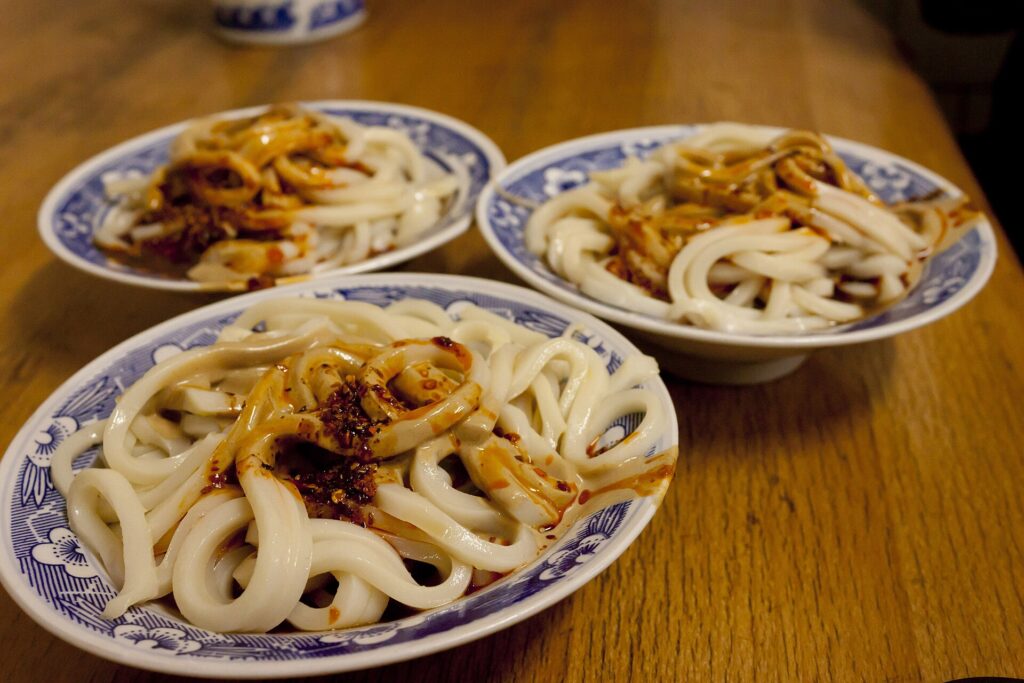
Quick answer: Liangpi (凉皮, cold skin noodles) is a cool, chewy noodle dish made from wheat or rice starch, tossed with vinegar, chili oil, garlic, cucumber and bean sprouts. It is one of the most common street and casual-restaurant dishes in China — especially in Shaanxi — and costs roughly RMB 6–15 a bowl. For first-time visitors it is the easiest cold snack to order: you point, say yi fen liangpi (one portion of liangpi), and add chili to your taste.
Last reviewed: August 2026. Prices vary by city and shop; confirm the latest before ordering.
What liangpi actually is
Liangpi means “cold skin”. The noodles are made by washing wheat dough or steaming rice starch into wide, slippery sheets, then cutting them into ribbons. The texture is the point: cool, soft and slightly springy, unlike hot wheat noodles. The classic dressing is vinegar, chili oil, soy sauce, garlic water, sesame, cucumber and bean sprouts. Regional versions exist — Xi’an’s mianpi (面皮, wheat) and mipi (米皮, rice) are the most famous, and Guanzhong-style qishan gan mianpi is drier and chewier.
It pairs with other Shaanxi classics such as roujiamo and biang biang noodles — a cold liangpi with a warm roujiamo is a classic light meal.
How to order liangpi
- Say the name: “yi fen liangpi” (one portion of liangpi). For rice version ask “mi pi”; for wheat ask “mian pi”.
- Choose spice level: “shao la” (a little spicy) or “bu la” (not spicy) if you prefer mild.
- Pick the size: most shops offer small and large; large is about double the noodles.
- Pay first: in street shops you usually order and pay at the counter, then take the bowl.
Where to find the best liangpi
Disclosure: This post contains affiliate links. If you buy through them, we may earn a small commission at no extra cost to you. This never affects what we recommend or what you pay. We are not paid to publish positive reviews.
Xi’an is the strongest city for liangpi, especially around the Muslim Quarter and Sajinqiao. Look for a shop with a fast queue and a visible bowl of prepared noodles rather than a tourist menu. In Beijing, Shanghai and other big cities, Shaanxi restaurants serve the same dish at slightly higher prices. A guided option: a Xi’an food tour that includes a liangpi stop makes ordering and spice choices easier on a first trip.
Liangpi FAQ
What is liangpi made of?
Liangpi is made from wheat starch or rice starch. Wheat version is called mianpi, rice version mipi. Both are steamed into sheets, cut into ribbons and served cold with vinegar, chili and vegetables.
Is liangpi spicy?
It is usually served with chili oil, but the heat is adjustable. Ask for “bu la” (not spicy) or “shao la” (a little spicy) and the shop will adjust.
Is liangpi served hot or cold?
Cold. Liangpi means “cold skin” and the dish is served chilled or at room temperature with a cold dressing, which makes it a good summer snack.
How much does liangpi cost?
Roughly RMB 6–15 a bowl in most Chinese cities. Street stalls are cheapest; restaurant versions with more toppings cost a bit more.
Related guides
- Roujiamo in Xi’an
- Biang Biang Noodles in Xi’an
- Xi’an Muslim Quarter Food Guide
- China Food Guide for Foreign Tourists
- Xi’an Travel Guide
Affiliate note: if you use the Klook links on this liangpi guide, we may receive a commission without increasing your price.