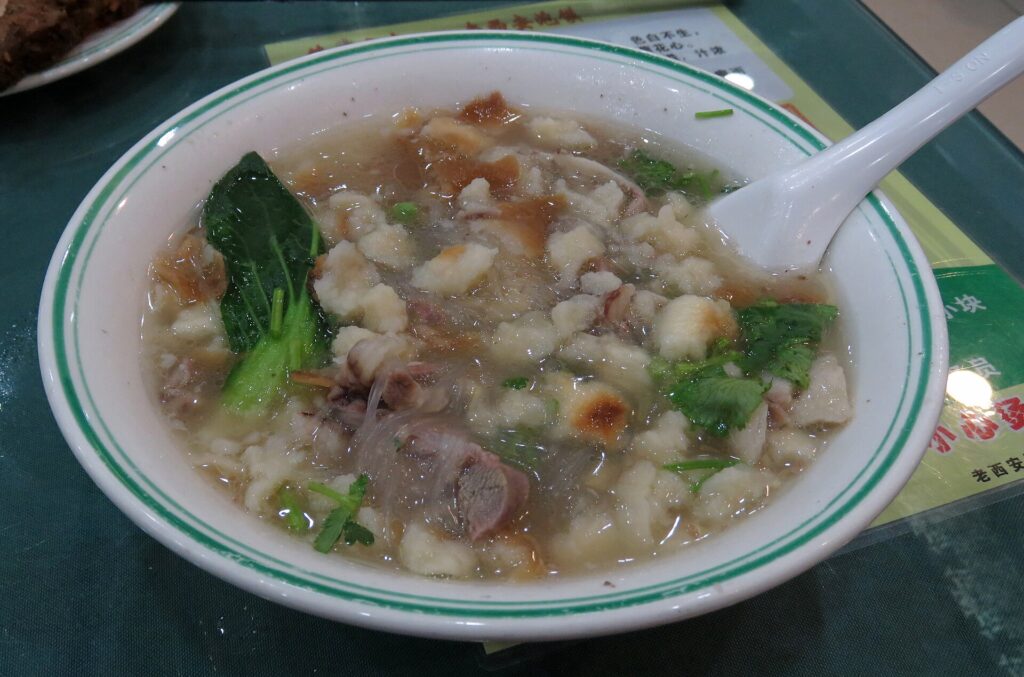
Quick answer: Yangrou paomo (羊肉泡鴻, lamb soup with soaked bread) is Xi’an’s most famous dish: you tear flatbread into small pieces, the kitchen pours rich lamb broth over it, and you eat it with chili oil and pickled garlic. A bowl usually costs about RMB 25–45 in the Muslim Quarter area. It is a slow, hearty meal, very different from quick noodles like biang biang noodles — plan 30–40 minutes and arrive hungry.
Last reviewed: August 2026. Prices and opening hours change; confirm the latest before your visit.
What yangrou paomo is
Yangrou paomo is a Shaanxi classic: a bowl of rich lamb broth with chewy pieces of unleavened flatbread (mo) that soak up the soup. The bread is baked first, then torn by hand into tiny pieces so it absorbs the broth without turning to paste. The result is warm, filling and very savory, with lamb stock, sometimes mutton, and toppings like vermicelli and cilantro.
It is different from biang biang noodles (a dry tossed noodle) and from roujiamo (a handheld sandwich). Paomo is the dish Xi’an locals order when they want a proper, slow meal.
How to eat it (the right way)
- Tear the bread yourself: you get one or two baked buns (mo). Tear them into small, bite-size pieces — smaller pieces absorb more broth.
- Hand it to the kitchen: your bowl goes back with your torn bread, and the kitchen fills it with boiling lamb broth.
- Season it your way: add chili oil, pickled garlic, sugar garlic or cilantro to taste. Start with a little chili — you can always add more.
- Eat with a spoon: it is a soupy, soupy-bread dish. Scoop from the edge, not the middle, to keep it hot.
Where to eat yangrou paomo in Xi’an
The Muslim Quarter and the area around the Bell Tower are the easiest places for first-timers, with many shops that specialize in paomo. Look for a busy local shop with quick turnover rather than the most touristed front lane. Around the city wall and in residential streets you will find cheaper, less touristy bowls.
Disclosure: This post contains affiliate links. If you buy through them, we may earn a small commission at no extra cost to you. This never affects what we recommend or what you pay. We are not paid to publish positive reviews.
A guided option: a Xi’an food walk that includes paomo can be a relaxed way to try it with someone who explains the ritual. Otherwise, any shop with “泡鴻” (paomo) in the name and a busy counter works.
How to order
Say yi wan yangrou paomo (one bowl of lamb paomo) and point to the buns. If you are hungry, order liang ge mo (two buns); one bun is enough for a light meal. If you do not eat lamb, ask for niurou paomo (beef paomo). Some shops also do a plain “paomo without meat” or vegetarian versions — ask “you mei you su de?”
Price and tips
- Price: roughly RMB 25–45 per bowl in the Muslim Quarter; cheaper in local shops further out.
- Spice level: mild by default; chili oil is added to taste.
- Pair with: a cold dish like roujiamo or a side of pickled garlic, and tea or a local drink.
- Timing: breakfast-to-lunch places start early; many paomo shops close after the lunch rush, so go before 2 pm.
Yangrou paomo FAQ
What is yangrou paomo?
Yangrou paomo is a Xi’an dish of lamb broth poured over hand-torn flatbread pieces, eaten with chili oil, pickled garlic and sometimes vermicelli. It is one of the city’s signature dishes.
Is yangrou paomo spicy?
Not by default. The broth is savory and rich; chili oil is added at the table, so you control the heat.
Is there a vegetarian version?
Some shops offer a plain bread-soup version without meat, but it is not standard everywhere. Beef paomo (niurou paomo) is a common alternative if you eat beef but not lamb.
How much bread should I order?
One bun is a light meal; two buns is a generous serving and the default for hungry locals. Start with one and order more if needed.
Affiliate note: Some links in this guide may earn Discover Real China a commission at no extra cost to you. Always compare current prices, coverage and terms before paying.